We Have Questions: When Will Davidson Join Other Leading Universities and Colleges in Reinstating the SAT/ACT Test for Admissions?


When Will Davidson Join Other Leading Universities and Colleges in Reinstating the SAT/ACT Test for Admissions?

During the 2020 pandemic, many higher education institutions, including Davidson College, ceased requiring the SAT/ACT tests for admissions. The current trend, especially among elite institutions, is to reinstate the tests as part of the admissions process. Those doing so in the 2026 or 2027 admissions cycles include Harvard, Yale, Princeton, Dartmouth, Brown, Cornell, Columbia, U Penn, MIT, Stanford, CalTech, Georgetown, and Notre Dame. And public universities in North Carolina, Florida, and elsewhere have done the same. 


According to the admissions consulting firm Oriel, three considerations have provoked the policy turnaround. First, internal studies at Dartmouth, MIT, and Brown found that standardized test scores are the most reliable predictor of first-year academic performance—in part because of rampant grade inflation in secondary education. Second, test scores help admissions officers identify high-potential students from under-resourced schools who might otherwise be passed over because their applications lacked the polish of better-resourced peers. And thirdly, the absence of test scores has forced admissions officers to weigh other factors more heavily, and those factors (recommendations, essays, activity profiles) have been shown to be more correlated with family socioeconomic resources than SAT/ACT scores are. Schools simply found that test-optional admissions had not produced the equity gains that had been the original justification for the policy.


Given the growing body of evidence that a test-optional policy is counter-productive, the question must be asked: Why is Davidson maintaining the test-optional policy it adopted in 2020? And why does it say on its website that not only are SAT/ACT scores optional on applications, but add, “And we mean it.” DFTD maintains that on grounds of both educational excellence and equity, the SAT/ACT test requirement should be reinstated.

September 14, 2026
When Will Davidson Join Other Leading Universities and Colleges in Reinstating the SAT/ACT Test for Admissions?
June 29, 2026
As America commemorates 250 years of independence, we reflect on the enduring principles of liberty and learning that have defined Davidson College for nearly two centuries.
June 21, 2026
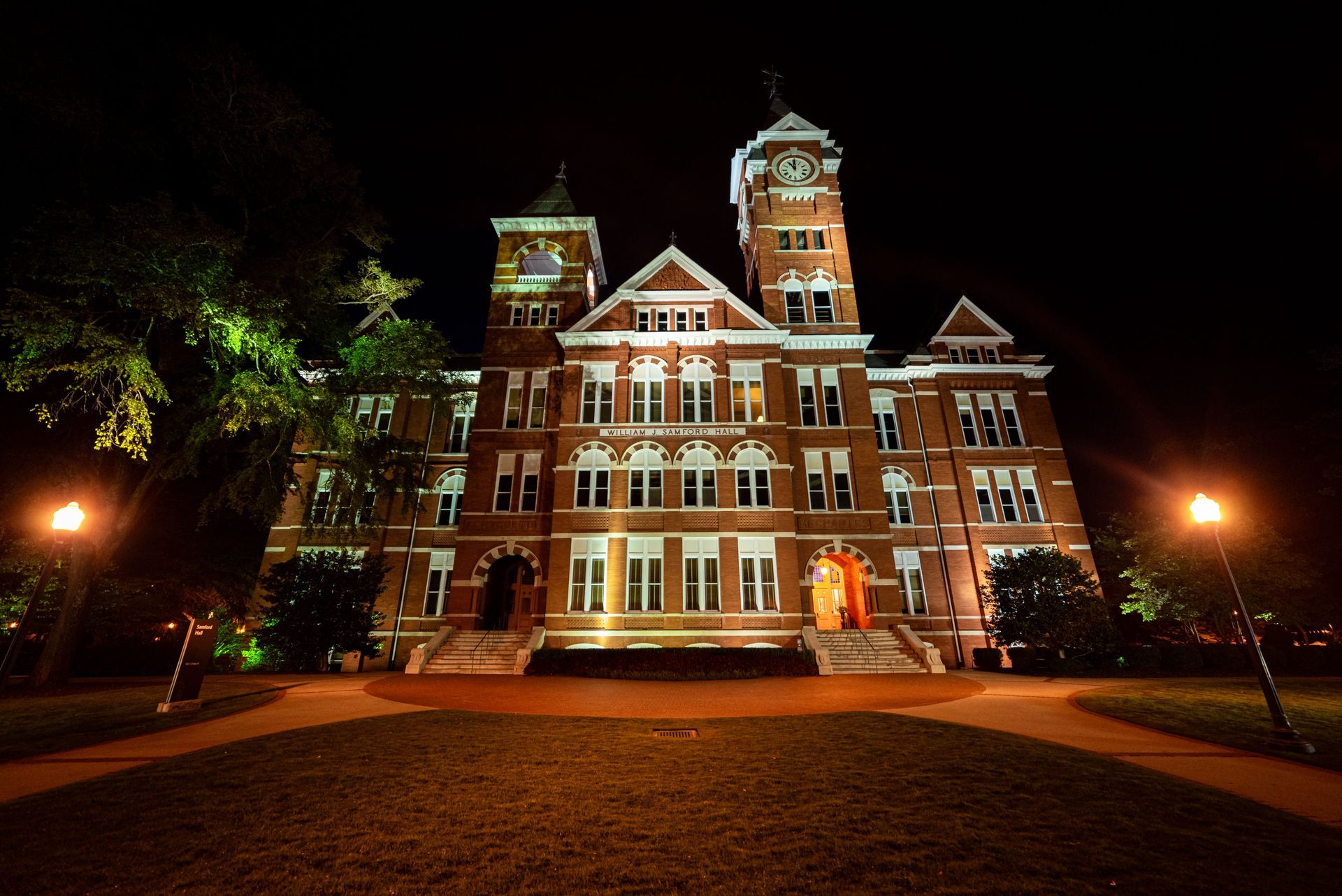
By Todd Zywicki The Wall Street Journal June 21, 2026 Auburn University is known for its agricultural and STEM programs, its flight school and athletic programs. But the land-grant university recently became notable for another reason: The board of trustees is taking control of the school back from its faculty. The board began seizing the university’s academic programs—including curriculum, course offerings, degree requirements and academic credentials—at its June 5 meeting. The board also dissolved the faculty senate and replaced it with an advisory council to the president, which includes two faculty members from each of the university’s colleges and additional members appointed by the president. The board’s assertion of authority mirrors incoming mandates by the Alabama Legislature restricting the role of faculty senates in the state’s public university system. Predictably, Auburn’s faculty has responded with howls of outrage, decrying these intrusions on the faculty’s authority over academic operations. How could outsiders appointed through a political process have the expertise to make such delicate decisions? I’ve been a professor at a state university for almost 30 years, and I am sympathetic up to a point. But before becoming a professor I was a bankruptcy lawyer. And bankruptcy law teaches an important lesson for how academia can respond to this moment. Bankruptcy gives businesses an opportunity to admit mistakes, reform and emerge stronger. Successful enterprises don’t need bankruptcy lawyers. But when an enterprise loses its way, it goes into receivership. Most universities aren’t financially bankrupt but have lost their mission and direction. Society has long recognized certain institutions’ authority to manage their own affairs. Two notable examples are licensed professionals—such as doctors and lawyers—and universities. Universities, even state universities, have run their enterprises with minimal external oversight. Faculties enjoyed substantial rights of self-governance because they committed to higher standards than those required by ordinary jobs. Professors would establish and maintain standards of scholarly integrity, freedom of speech and inquiry, and rigorous dedication to merit-based assessment of research in specialized areas. They policed their own house, enforcing norms of truth-seeking, maintaining scholarly integrity and rigor, and ensuring that students emerged with basic knowledge, employable skills and civic competency. But over the past several decades, commitment to those values collapsed. Surveys by the Foundation for Individual Rights and Expression consistently reveal fear among students and faculty around expressing unfashionable ideas. Universities have seen shout-downs, cancellations and even violence against speakers. Merit and quality yielded to “diversity” and “equity.” Truth-seeking has been displaced by faddish theories and ideologically charged teaching and research. Professors design esoteric departments and teach niche classes to cliques of activist students while the needs of other students and taxpayers for real education go unaddressed. Like companies I represented, universities have lost their way. And many have proved either unable or unwilling to self-correct. When that happens, it is appropriate to put institutions into receivership until they reform and rededicate themselves to their mission. At Auburn incoming students must now take certain required civics and history courses to master basic competency in U.S. history and government. To ensure the classes actually meet that objective, professors will have to make their syllabi publicly available. In the classroom, instructors will be expected to stick to the matter at hand and avoid free-ranging political punditry. Just as other companies can learn from the ones that go bankrupt, other institutions of higher education can learn something from Auburn: Fix what’s broken, or someone else might fix it for you. Mr. Zywicki is a professor at George Mason University’s Antonin Scalia Law School. He was a Dartmouth College trustee, 2005-09. https://www.wsj.com/opinion/bankruptcy-and-higher-education-4c2b178e
Show More