Davidson’s Free Speech Climate Is Moving in the Right Direction
When Will Davidson Join Other Leading Universities and Colleges in Reinstating the SAT/ACT Test for Admissions?
For years, surveys of Davidson students have raised concerns about the climate for free expression on campus. Too many students have reported feeling uncomfortable voicing unpopular opinions, disagreeing with professors or speaking candidly about controversial issues.
The latest results from the Foundation for Individual Rights and Expression (FIRE), however, offer reason for optimism.
Across several important measures, Davidson students report feeling substantially more comfortable expressing themselves than they did just two years ago. The progress is not universal, and there remains important work to do. But the trend since 2024 is increasingly difficult to ignore.
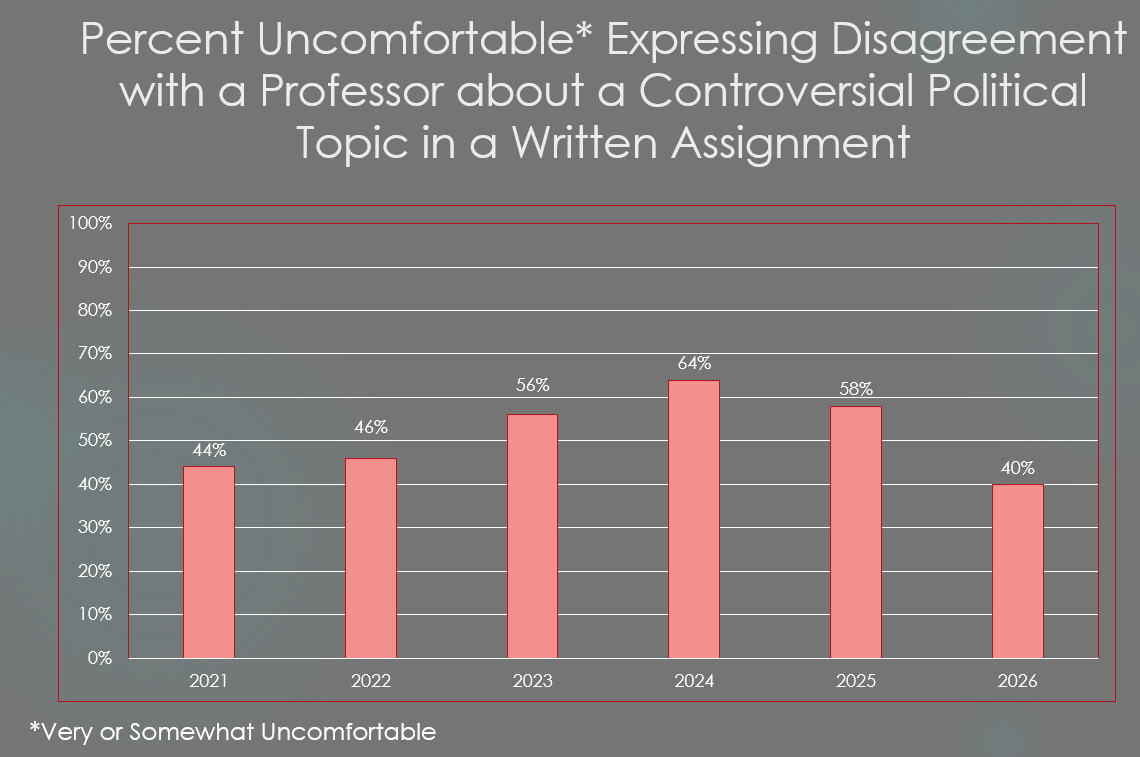
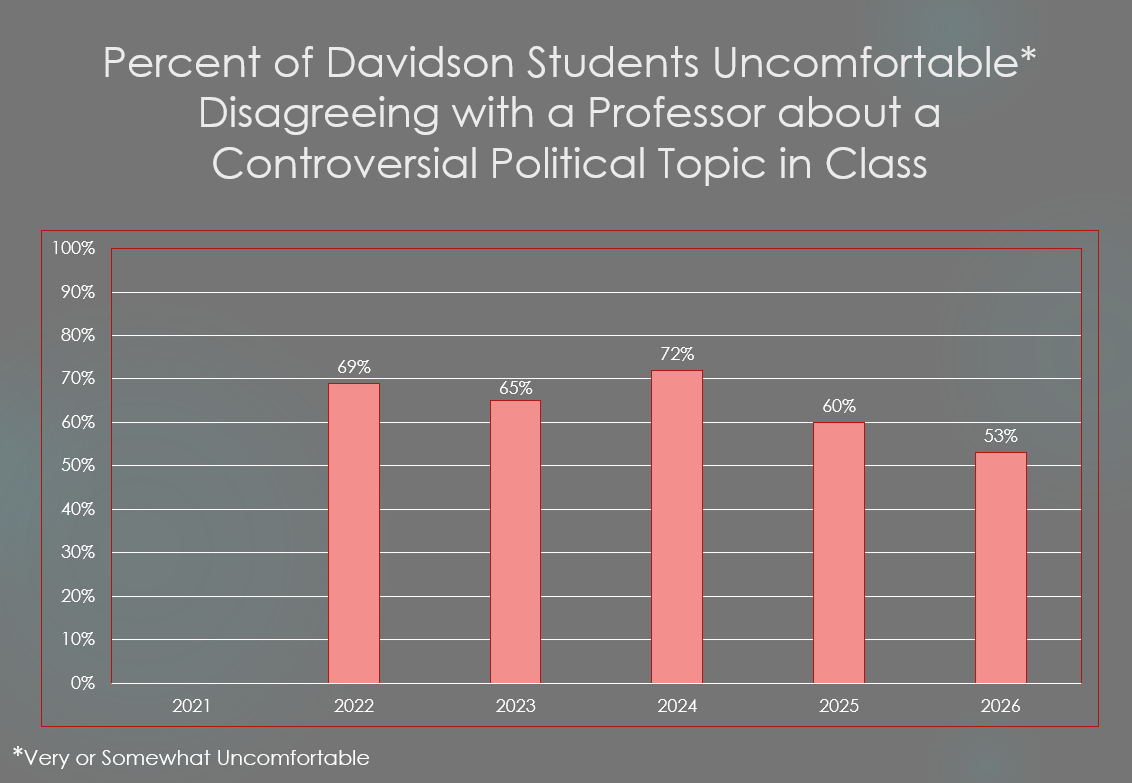
In 2024, 64% of Davidson students surveyed said they were uncomfortable expressing disagreement with a professor about a controversial political topic in a written assignment. In the 2026 results, that number has fallen to 40%.
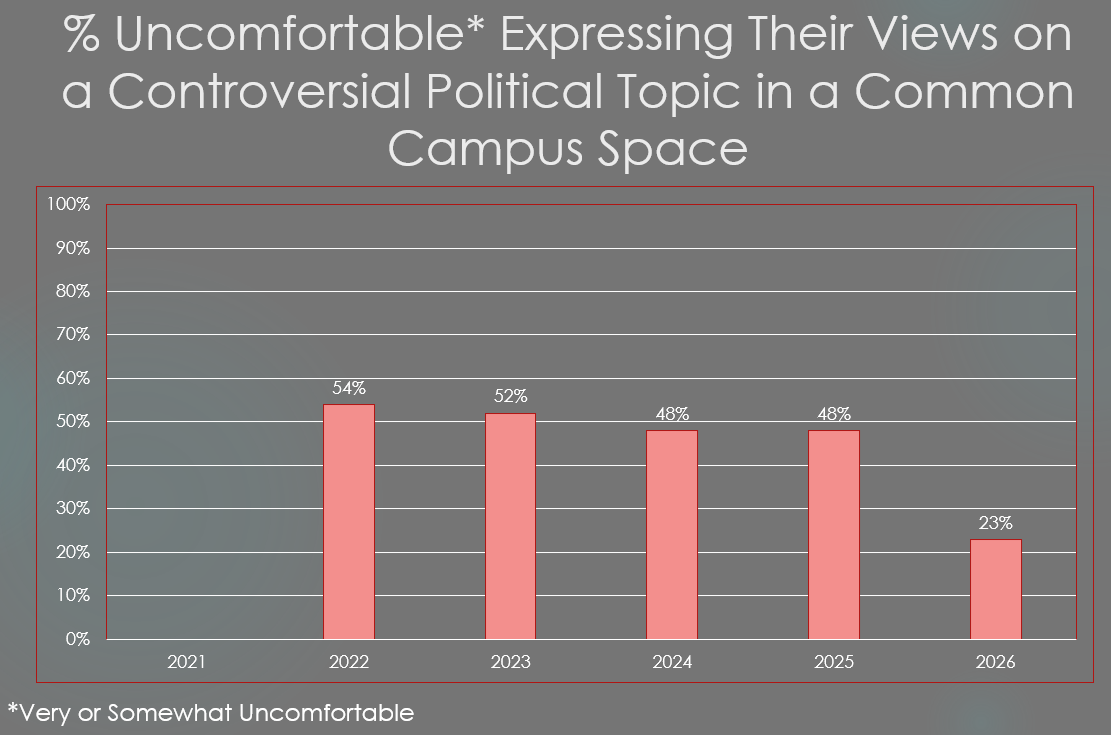
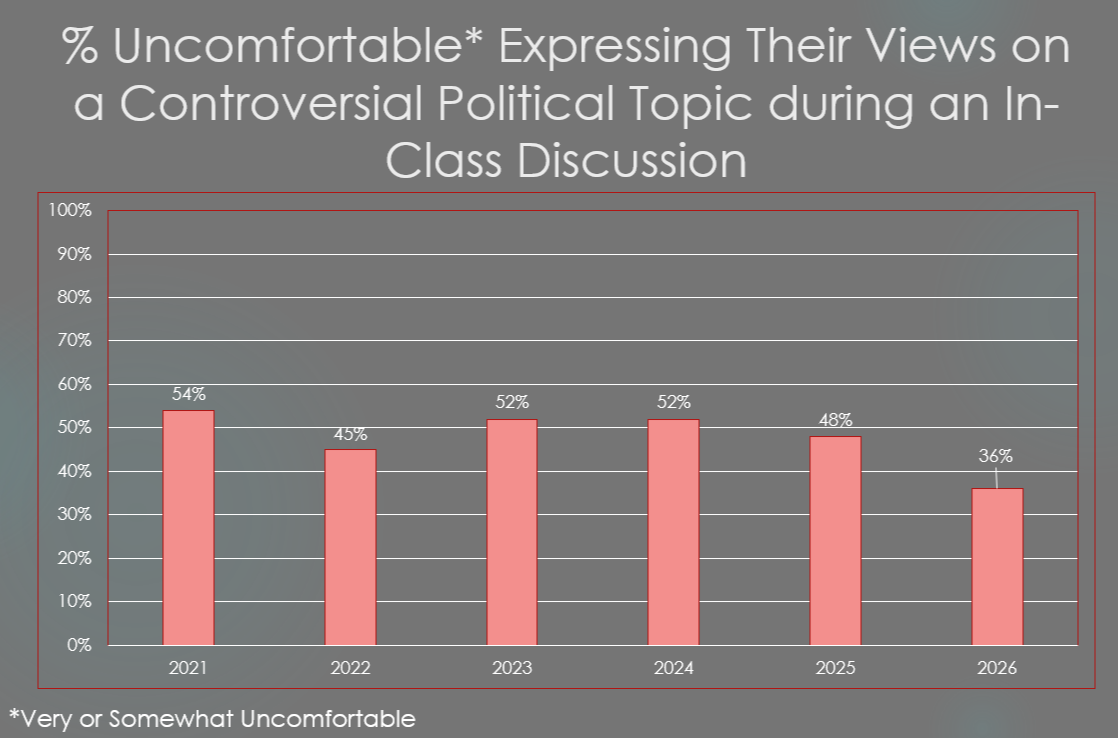
The same pattern appears inside the classroom. The percentage uncomfortable expressing their views on a controversial political topic during an in-class discussion declined from 52% in 2024 to 36% in 2026. Outside the classroom, the percentage uncomfortable expressing those views in a common campus space fell even more dramatically from 48% to just 23%.
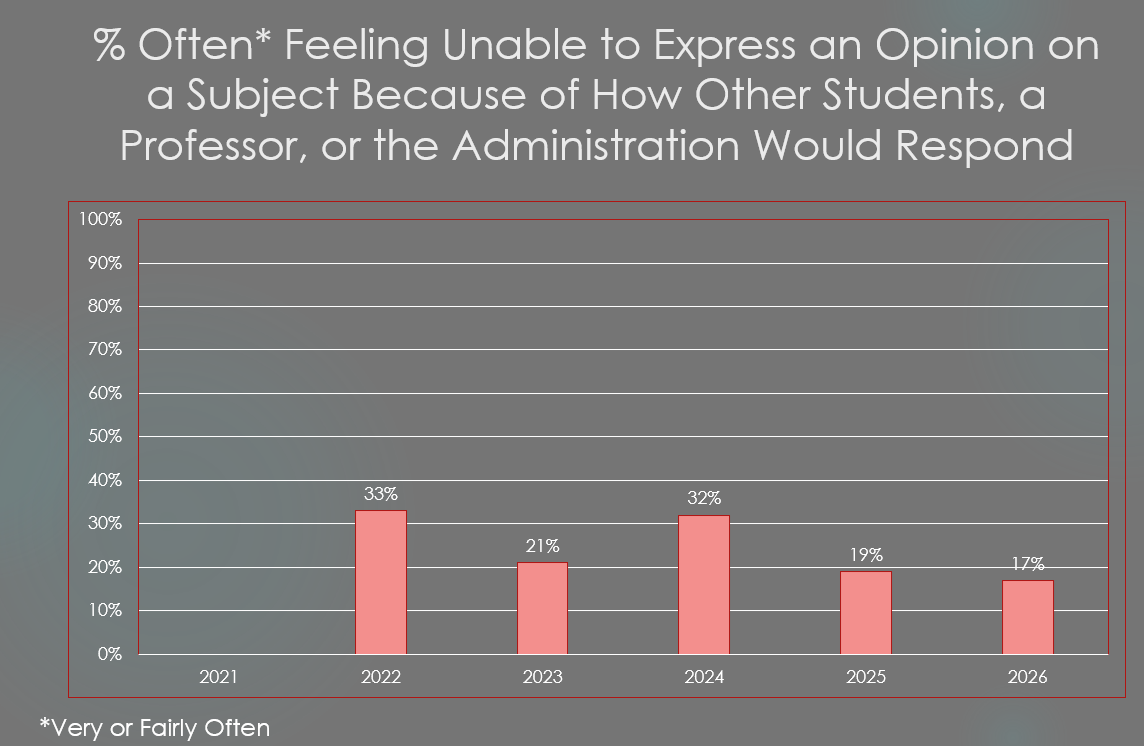
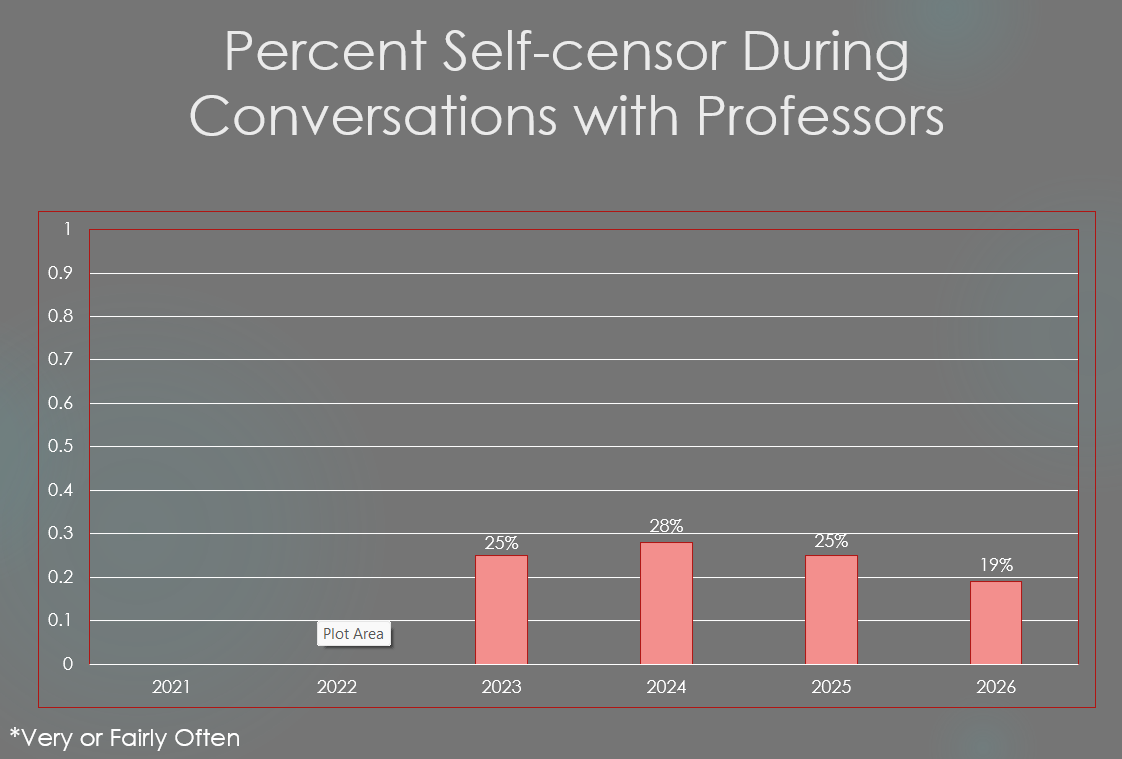
Perhaps most encouraging, the percentage of students who frequently feel unable to express an opinion because of how fellow students, professors or administrators might respond has declined from 32% in 2024 to 17% in 2026.
Those numbers suggest something meaningful may be changing at Davidson.
Credit Where Credit Is Due
DFTD has never believed that improving Davidson's culture of free expression is the responsibility of any one organization. Lasting change requires students, faculty, alumni, trustees, and college leaders who are willing to defend open inquiry and create opportunities for genuine disagreement.
We wish to congratulate President Doug Hicks and Davidson College for the work they have done toward that goal.
One of the most important steps was Davidson's adoption of its Commitment to Freedom of Expression Statement in 2023. Affirmed by both the faculty and trustees, the statement guarantees members of the Davidson community broad latitude to "speak, write, listen, challenge, and learn" and makes clear that debate and deliberation cannot be suppressed simply because an idea is considered offensive or unwise.
That commitment has not simply disappeared into a collection of college policies.
President Hicks has repeatedly invoked it in his leadership. In 2024, he joined more than 90 other college presidents in the College Presidents for Civic Preparedness, whose shared commitments include preparing students for a diverse and contentious society and protecting and defending free inquiry.
In March 2025, amid national debates over higher education, Hicks again emphasized Davidson's commitment to freedom of expression and called on the community to ensure that it applies to everyone, regardless of identity or worldview. He also pointed to the Deliberative Citizenship Initiative as one way Davidson puts those principles into practice.
That initiative, led by Professor Graham Bullock, creates structured opportunities for students, faculty, staff and community members to engage productively with difficult and contentious issues. Its forums, facilitator training, and Deliberative Teams teach something essential to a healthy culture of free expression: not merely the right to disagree, but the ability to disagree constructively.
Davidson is now expanding that work far beyond campus. In 2026, the college launched the Deliberative Citizenship Network, beginning with 24 colleges and universities and designed to eventually reach as many as 100 institutions nationwide. The effort is supported by a nearly $4 million federal grant and is part of Davidson's new D.G. and Harriet Wall Martin Institute for Public Good.
The Martin Institute itself represents another significant investment. Its Beacon Program on Deliberation and Free Expression brings together Davidson's work on civil discourse, ideological pluralism, academic freedom and free expression, with plans to give students across campus opportunities to develop the skills necessary for thoughtful disagreement.
President Hicks has also made the college's commitment more visible. As he noted earlier this year, Davidson's Commitment to Freedom of Expression now hangs in the heart of Chambers Building, across from students' signatures on the Honor Code.
Symbolism alone cannot create a culture of free expression. But symbolism paired with policy, programming and sustained leadership can matter.
Students Are Noticing
Perhaps the most significant FIRE finding concerns students' confidence in Davidson's administration.
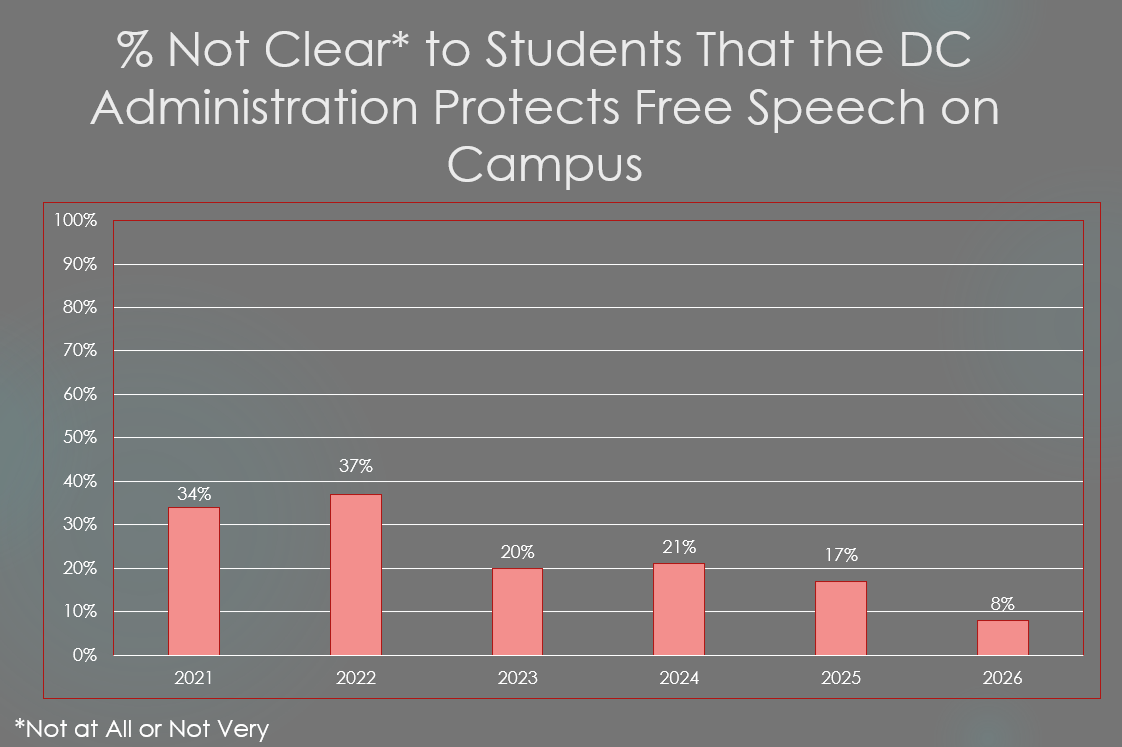
In 2024, 20% of surveyed students said it was "not at all" or "not very" clear that the Davidson administration protects free speech on campus. By 2026, that number had fallen to just 8%.
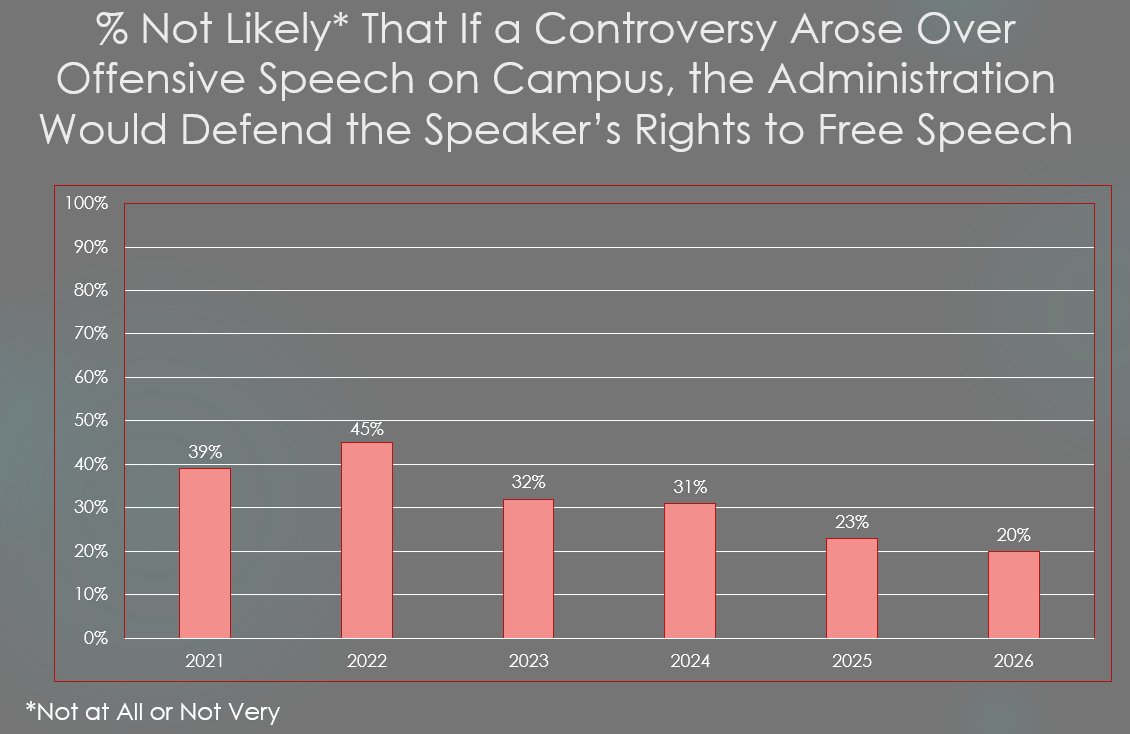
Similarly, the percentage who said the administration would be unlikely to defend a speaker's free-speech rights if controversy arose over offensive speech declined from 32% in 2024 to 20% in 2026.
Those results are especially noteworthy because institutional statements mean little if students do not believe administrators will stand behind them when controversy arrives. The FIRE data suggest that a growing share of Davidson students believes the college will.
Progress, Not a Victory Lap
There is still plenty of room for improvement.
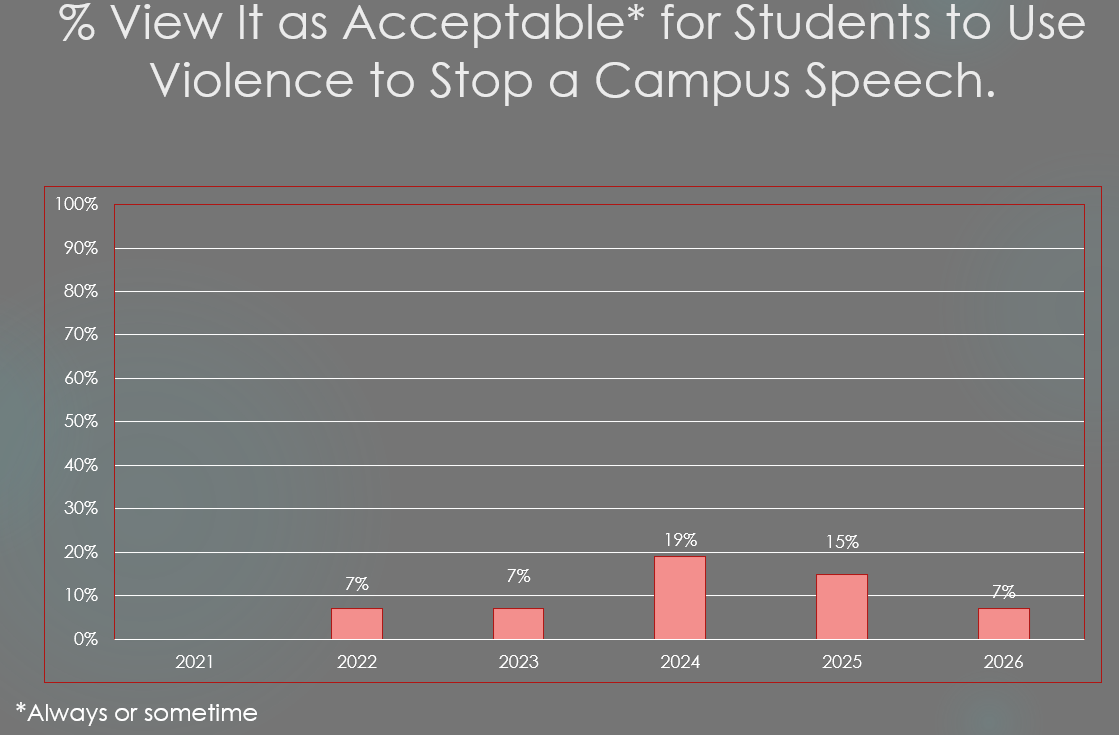
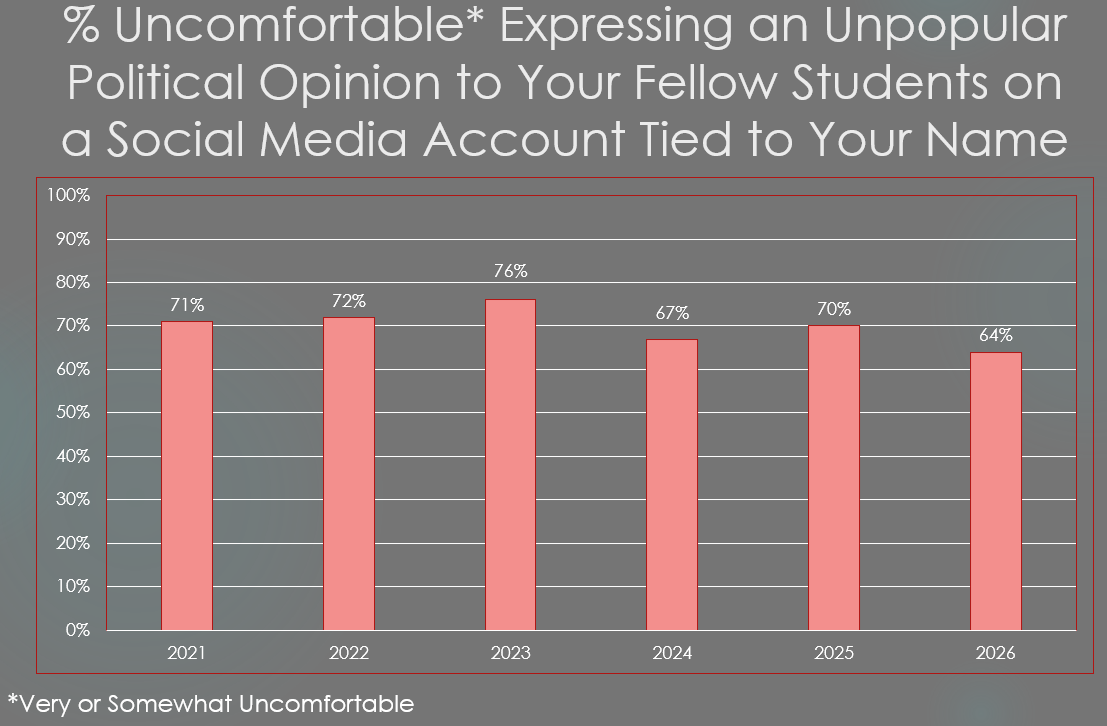
Nearly two-thirds of Davidson students remain uncomfortable expressing an unpopular political opinion on a social media account tied to their name. And 40% say it is acceptable, at least sometimes, to shout down a campus speaker to prevent that person from speaking.
Those numbers should concern anyone who values a campus where ideas can be challenged rather than silenced.
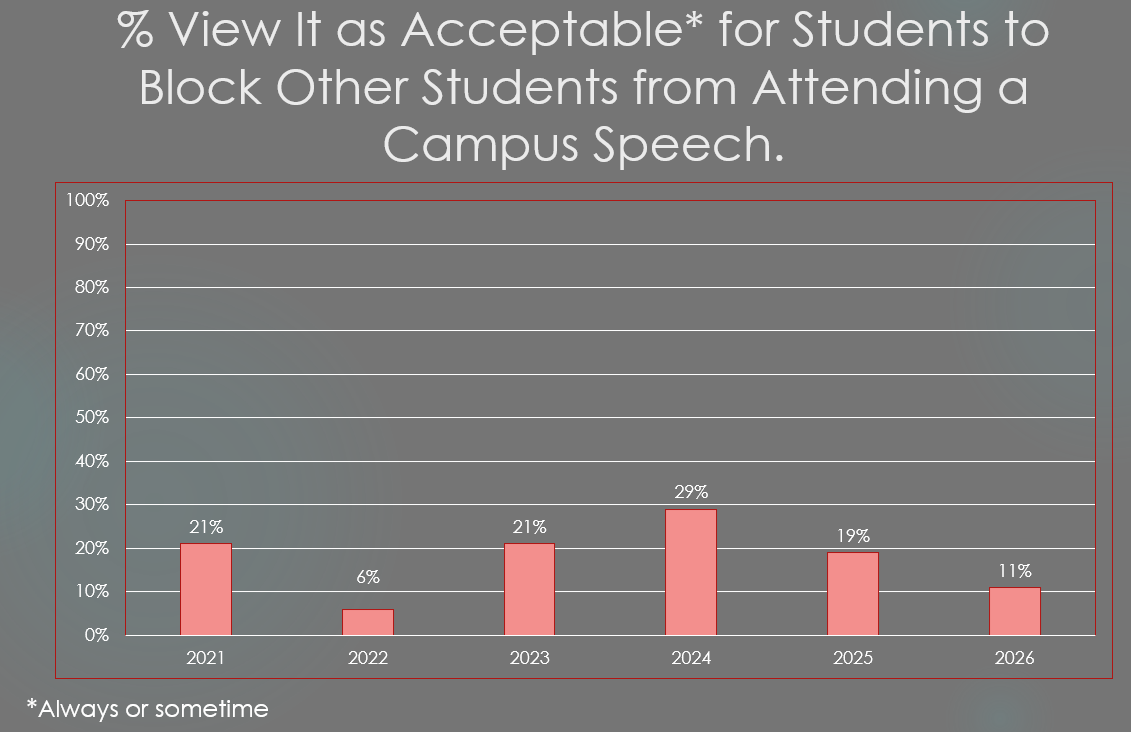
At the same time, other measures of intolerance toward campus speech have improved significantly. In 2024, 29% of students considered it acceptable at least sometimes to block other students from attending a campus speech. That figure has fallen to 11% in 2026.
The lesson from this year's results should therefore be neither complacency nor pessimism.
Davidson still has work to do. So does DFTD. But after years of documenting areas of concern, we should be equally willing to acknowledge progress when the evidence points in that direction.
President Hicks, Professor Bullock, Davidson's faculty and trustees, and the students participating in programs such as DCI deserve credit for helping strengthen a culture in which disagreement is increasingly treated as an essential part of a Davidson education.
DFTD will continue advocating for policies and practices that protect freedom of expression, intellectual diversity and open inquiry. We will also continue measuring Davidson's progress and raising concerns when the evidence warrants it.
But the 2026 FIRE results give us something worth celebrating: on several of the measures that matter most, Davidson students appear more willing to speak—and more confident that their college will protect their right to do so.
That is progress worth recognizing. And it is a foundation worth building upon.
Measuring Progress: FIRE’s Davidson College
Free Speech Survey Results, 2021–2026