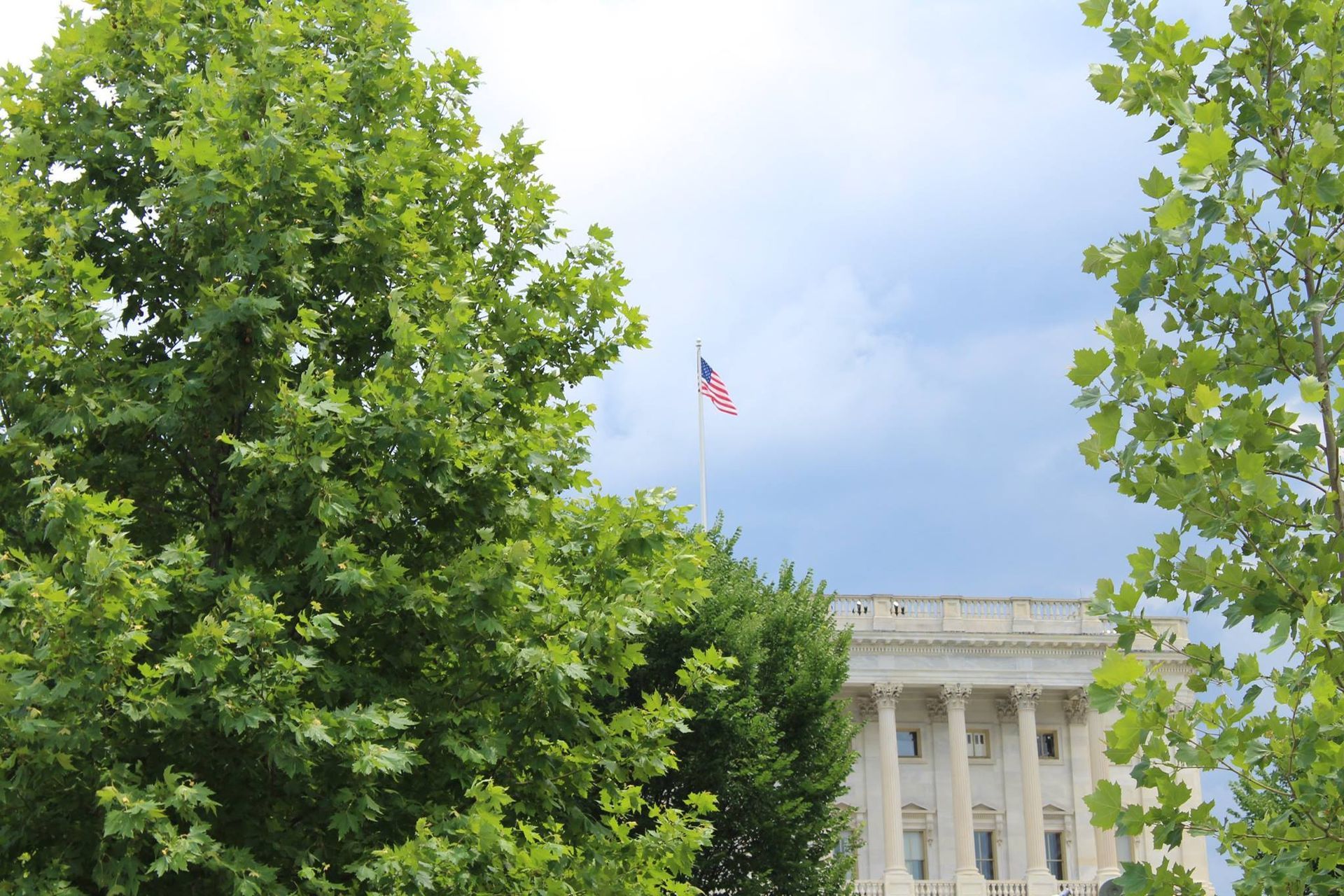
American University dissolves DEI response team after spending $121 million on related initiatives


The school’s Campus Action Response Team launched in 2024 with no public announcement, and now it has been terminated just two years later.


The university has a lengthy history of DEI initiatives, including a $121 commitment to such programming through its Plan for Inclusive Excellence.

Read Full Article - Campus Reform

By Eli Stephens

Campus Reform

June 17, 2026 


American University in Washington, D.C., recently terminated one of its diversity, equity, and inclusion initiatives with little explanation that it launched just two years ago.


According to reporting from student newspaper The Eagle, American University’s Campus Climate Action Response Team (CART) was launched in 2024 without a public announcement or campuswide email. By spring 2026, the program had stopped operating entirely.


CART operated under the university’s Office of Inclusive Excellence and was designed to address “campus climate concerns” that did not rise to formal policy violations. The program was intended to provide restorative justice responses, including facilitated conversations and community-level interventions. 


According to the school’s Recognized Student Organization Manual, student organization executive boards could also be required to engage with CART to “design and implement restorative practices” following campus incidents in which the Office of Equity and Title IX or the Office of Student Accountability determined “the organization’s conduct created or contributed to a climate concern.”


[RELATED: Univ of Louisville sociology professor says curriculum mostly unchanged after Kentucky anti-DEI law]


The manual states those measures could include “a formal acknowledgment of harm, a restorative dialogue or circle, and/or initiatives aimed at building trust with affected communities or groups.”


However, reporting from The Eagle claimed that CART never established a physical office, with student reports instead being redirected to the university’s Title IX office.


The program’s apparent dissolution coincided with administrative turnover, including the departure of Assistant Vice President for Diversity, Equity, and Inclusion Amanda Taylor. Only three administrators reportedly remain loosely connected to CART’s former responsibilities, though they no longer operate as a formal response team. 


Several students interviewed by The Eagle said they had never heard of CART before this semester despite American University’s extensive DEI infrastructure. Even the AU College Democrats mistakenly listed CART as an active campus resource in a recent public statement.


Students also expressed skepticism about whether another administrative initiative would effectively address campus conflicts. Some cited broader concerns about trust between students and university leadership.


[RELATED: SUNY Purchase keeps DEI committee targeting ‘systemic bias’]


Despite the program’s inactivity, American University continues listing CART as an available student resource on its website without publicly indicating the initiative has been paused or dissolved.


University officials told The Eagle that additional information about the program’s future could become available within six months.


American University has a lengthy history of promoting DEI initiatives. The school notes on its website that it has received “4 National Awards for Inclusive Excellence” and currently operates “131 cultural and inclusive excellence-focused student clubs and organizations.”


According to a 2024 self-study report, the university also opened Black affinity housing and increased “new tenure-line faculty who identify as faculty of color from 39 percent in 2018 to 56 percent in 2019.”


In 2018, the university announced plans to invest more than $120 million over two years toward diversity, equity, and inclusion initiatives through its Plan for Inclusive Excellence. 


American University also has a Diversity and Equity (DIV) course requirement focused on topics including “power, privilege, and inequality” related to race, class, gender, sexuality, and other social hierarchies.


The school’s Research Archive further includes a thesis discussing “anti-white-supremacy” learning spaces for educators, in which the author asserts that “the United States has been and continues to be a racial dictatorship.”


American University has been contacted for comment. This article will be updated accordingly.



June 21, 2026
By Todd Zywicki The Wall Street Journal June 21, 2026 Auburn University is known for its agricultural and STEM programs, its flight school and athletic programs. But the land-grant university recently became notable for another reason: The board of trustees is taking control of the school back from its faculty. The board began seizing the university’s academic programs—including curriculum, course offerings, degree requirements and academic credentials—at its June 5 meeting. The board also dissolved the faculty senate and replaced it with an advisory council to the president, which includes two faculty members from each of the university’s colleges and additional members appointed by the president. The board’s assertion of authority mirrors incoming mandates by the Alabama Legislature restricting the role of faculty senates in the state’s public university system. Predictably, Auburn’s faculty has responded with howls of outrage, decrying these intrusions on the faculty’s authority over academic operations. How could outsiders appointed through a political process have the expertise to make such delicate decisions? I’ve been a professor at a state university for almost 30 years, and I am sympathetic up to a point. But before becoming a professor I was a bankruptcy lawyer. And bankruptcy law teaches an important lesson for how academia can respond to this moment. Bankruptcy gives businesses an opportunity to admit mistakes, reform and emerge stronger. Successful enterprises don’t need bankruptcy lawyers. But when an enterprise loses its way, it goes into receivership. Most universities aren’t financially bankrupt but have lost their mission and direction. Society has long recognized certain institutions’ authority to manage their own affairs. Two notable examples are licensed professionals—such as doctors and lawyers—and universities. Universities, even state universities, have run their enterprises with minimal external oversight. Faculties enjoyed substantial rights of self-governance because they committed to higher standards than those required by ordinary jobs. Professors would establish and maintain standards of scholarly integrity, freedom of speech and inquiry, and rigorous dedication to merit-based assessment of research in specialized areas. They policed their own house, enforcing norms of truth-seeking, maintaining scholarly integrity and rigor, and ensuring that students emerged with basic knowledge, employable skills and civic competency. But over the past several decades, commitment to those values collapsed. Surveys by the Foundation for Individual Rights and Expression consistently reveal fear among students and faculty around expressing unfashionable ideas. Universities have seen shout-downs, cancellations and even violence against speakers. Merit and quality yielded to “diversity” and “equity.” Truth-seeking has been displaced by faddish theories and ideologically charged teaching and research. Professors design esoteric departments and teach niche classes to cliques of activist students while the needs of other students and taxpayers for real education go unaddressed. Like companies I represented, universities have lost their way. And many have proved either unable or unwilling to self-correct. When that happens, it is appropriate to put institutions into receivership until they reform and rededicate themselves to their mission. At Auburn incoming students must now take certain required civics and history courses to master basic competency in U.S. history and government. To ensure the classes actually meet that objective, professors will have to make their syllabi publicly available. In the classroom, instructors will be expected to stick to the matter at hand and avoid free-ranging political punditry. Just as other companies can learn from the ones that go bankrupt, other institutions of higher education can learn something from Auburn: Fix what’s broken, or someone else might fix it for you. Mr. Zywicki is a professor at George Mason University’s Antonin Scalia Law School. He was a Dartmouth College trustee, 2005-09. https://www.wsj.com/opinion/bankruptcy-and-higher-education-4c2b178e
June 19, 2026
By the Editorial Board The Wall Street Journal June 19, 2026 The Supreme Court’s 2023 ruling against racial preferences is turning out to be a landmark with profound consequences as its influence spreads. On Thursday the famously progressive Wisconsin Supreme Court ruled unanimously that a state program that issued scholarships based on race violates the U.S. Constitution. Justice Annette Ziegler wrote for the court that the Constitution requires “that every person ‘must be treated based on his or her experiences as an individual—not on the basis of race,’” and that the state cannot “use race as a factor in affording educational opportunities among its citizens.” That must have been painful for the activist liberal majority on the court. In a concurrence, Wisconsin Chief Justice Jill Karofsky took some shots at Students for Fair Admissions v. Harvard College (2023) before acknowledging that “I am bound by the precedent set forth in SFFA” and other Supreme Court rulings “when interpreting the Fourteenth Amendment.” The case was brought by the Wisconsin Institute for Law and Liberty against a 1985 Badger State law that reserved need-based scholarships through a grant program for “Black American,” “American Indian,” “Hispanic” and some Southeast Asian undergraduate students enrolled in Wisconsin’s private and technical colleges. Last week the Iowa Supreme Court ruled that a scholarship program earmarked for black University of Iowa students studying physical sciences was “impracticable” under SFFA. State governments would be wise to repeal these discriminatory grant programs, or the courts will do it for them.
April 30, 2026
By James Freeman The Wallstreet Journal April 16, 2026 Hugo Chiasson and Elise Spenner report for the Harvard Crimson: Harvard is quietly asking donors for $10 million gifts to establish new endowed professorships in a sweeping bid to reshape its faculty under the banner of “viewpoint diversity,” according to two people familiar with the initiative. The campaign, driven by Harvard’s top brass, aims to raise several hundred million dollars to support a new cohort of professors. If successful, the funding could bring dozens of faculty members to campus and drastically shift Harvard’s academic makeup. University officials have pitched the effort to major donors — conservative and liberal alike — as a way to broaden ideological representation across Harvard, two people said. But the fundraising target has repeatedly shifted after pushback from donors who viewed the scale as too ambitious, one person said. Maybe it’s not ambitious enough. Duke professor Timur Kuran responds on X: This is one way to increase viewpoint diversity, but the heterodox thinkers to be hired would lack meaningful power on campus. Activist, woke departments would treat the heterodox thinkers as freaks, perhaps also as archenemies. Through its new Hamilton School, the U of Florida offers a more promising way: establishing competing departments that are not woke. Under UF’s reform, students get to choose courses from either side: the old woke departments and their un-woke alternatives. Advantages: 1) Heterodox thinkers are not marginalized. 2) Competition for students induces woke departments to shape up. To survive, the preexisting activist departments start putting more emphasis on scholarship and on improving their courses. Harvard’s path offers neither advantage. There’s an argument for simply shutting down the activist departments that are dedicated to dogma, rather than hiring people to counter them. There is also another path that might be the most serious and effective of all to reform such a university. Harvard could decide not to make any structural changes at all, and also to avoid asking for an expansion of resources, lest alumni suspect they are just getting run over by a new fundraising vehicle. Harvard could simply reallocate resources by annually firing the most ideological 10% of its faculty members and 20% of its administrators. Theoretically it might seem difficult to make subjective judgments on which of the staff are egregious in pushing personal political agendas. But in practice many academics have grown so comfortable making strident anti-intellectual pronouncements that the only challenge would likely arise when trying to limit the administrative cull to 20%. Step two of this plan for Harvard is to hire new faculty who are so curious and whose scholarship is so serious and unpredictable that no one can ascertain their political beliefs. After a few years people might be amazed at the improvement in campus culture, and at the sheer number of scholars who seem to delight in pursuing knowledge wherever it leads. Veritas! *** In Other News  Another Opportunity for Harvard to Enhance Viewpoint Diversity? Frank Newport and Lydia Saad report for Gallup: Driven by a recent increase, young men in the U.S. have now surpassed young women in saying religion is “very important” in their lives. Gallup’s latest data, from 2024-2025, show 42% of young men saying religion is very important to them, up sharply from 28% in 2022-2023. By contrast, during this period, young women’s attachment to religion has held steady at about 30%. Although young men had previously tied young women on this key marker of religiosity, young men now lead by a statistically significant margin. The recent increase among young men also contrasts with minimal changes since 2022-2023 among older men and women… Young women were significantly more attached to religion than young men were at the start of the millennium, leading by nine percentage points (52% vs. 43%) in calling religion “very important” in their lives. That gap widened to as much as 16 points in the early to mid-2000s before steadily narrowing over the next decade. By the mid-2010s, the difference had shrunk to about five points, and the two groups remained about this closely aligned through 2022-2023. The most recent data mark a clear break, with young men now surpassing young women on this measure of religious importance. In a possibly related story, the American Founding website notes a letter from Harvard alum John Adams to his patriotic pal Mercy Warren 250 years ago: I know of no Researches in any of the sciences more ingenious than those which have been made after the best Forms of Government nor can there be a more agreeable Employment to a benevolent Heart. The Time is now approaching, when the Colonies will find themselves under a Necessity of engaging in Earnest in this great and indispensable Work. I have ever Thought it the most difficult and dangerous Part of the Business Americans have to do, in this mighty Contest, to continue some Method for the Colonies to glide insensibly, from under the old Government, into a peaceable and contented Submission to new ones. It is a long Time since this opinion was conceived, and it has never been out of my Mind, my constant Endeavour has been to convince Gentlemen of the Necessity of turning their Thoughts to these Subjects… The Form of Government, which you admire, when its Principles are pure is admirable indeed. It is productive of everything, which is great and excellent among Men. But its Principles are as easily destroyed, as human Nature is corrupted. Such a Government is only to be supported by pure Religion, or Austere Morals. Public Virtue cannot exist in a Nation without private, and public Virtue is the only Foundation of Republics. There must be a positive Passion for the public good, the public Interest, Honor, Power, and Glory, established in the Minds of the People, or there can be no Republican Government, nor any real Liberty. And this public Passion must be superior to all private Passions…. Is there in the World a Nation, which deserves this Character. There have been several, but they are no more. Our dear Americans perhaps have as much of it as any Nation now existing, and New England perhaps has more than the rest of America. But I have seen all along my Life, Such Selfishness, and Littleness even in New England, that I sometimes tremble to think that, although We are engaged in the best Cause that ever employed the Human Heart, yet the Prospect of success is doubtful not for Want of Power or of Wisdom, but of Virtue. *** James Freeman is the co-author of “The Cost: Trump, China and American Revival” and also the co-author of “Borrowed Time: Two Centuries of Booms, Busts and Bailouts at Citi.”
Show More