
Davidson’s Ukraine Flag and The Question of Responsible College Reactions To Politics


By Stephen Walker '26

February 9, 2024


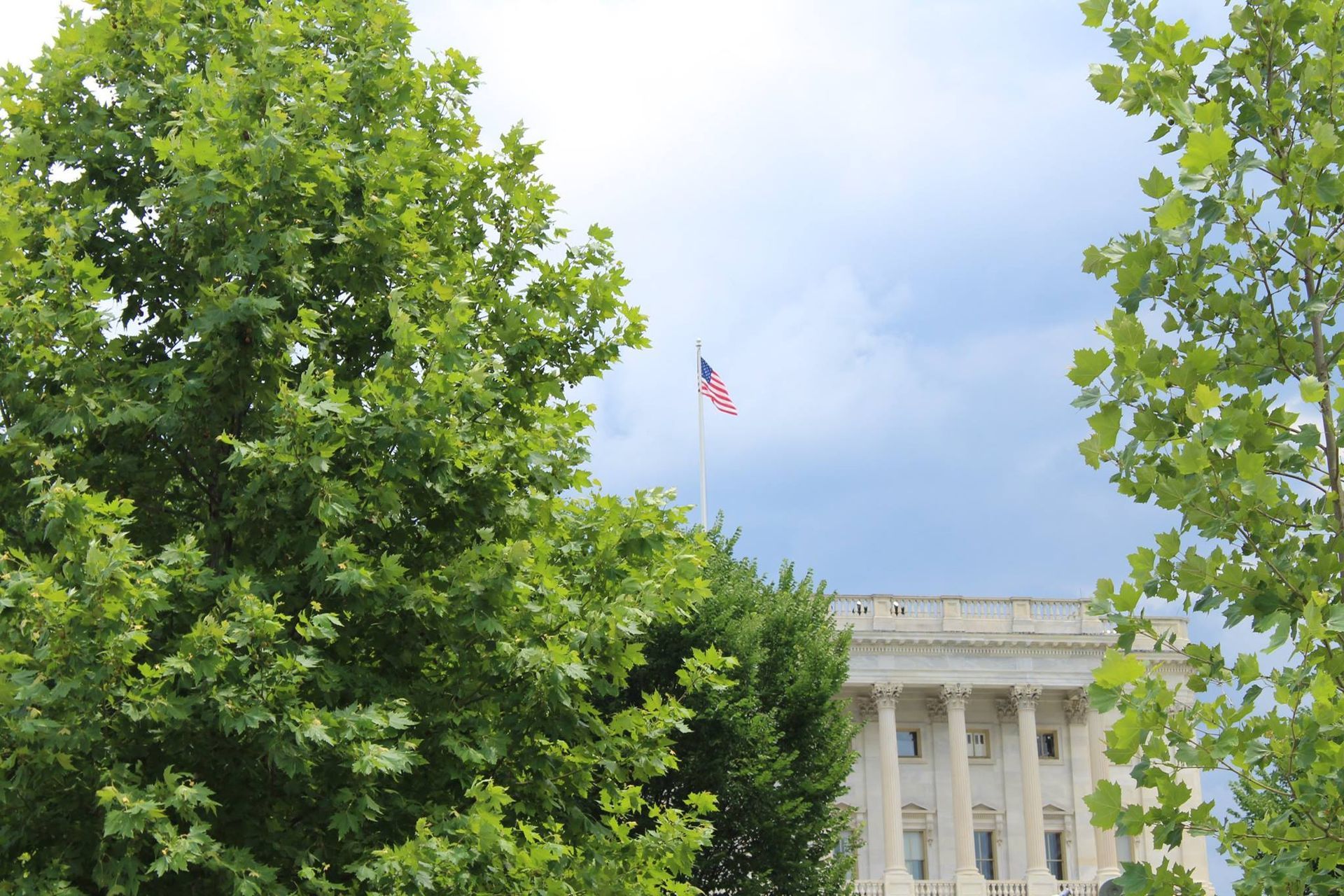
         The war in Ukraine had become a permanent story by the time I arrived at Davidson. Everyone knew about it and saw the same viral stories from time to time. There was an expert on the situation who came to campus to speak last semester, but that was an academic event and the issue as a whole has largely failed to deeply penetrate campus culture these last two years. Over this period, right beneath the American flag on Davidson’s flag pole flew the yellow and blue Ukrainian flag, an unwavering symbol of support for the far-away country. As I returned this semester I found the flag had vanished. No statement had been put out. No reason for the disappearance was made apparent to anybody. The stars and stripes fly alone again.


          The problem I see with an institution like Davidson making statements as clear as flying another country's flag with our own is twofold. Davidson is a place dedicated to courageous intellectual inquiry meant to prepare students for lives of substance. But when the school leaves this symbol of clear support for a faraway war waged in an environment much different from our homeland, it sends a message to students about what types of opinions are acceptable and what types are not. Rather than allowing students to engage in research and dialogue with one another to uncover the truth about the matter, they are told by this symbolic gesture to conform to the whims of those favoring war. Whims that many believe don’t seem to benefit either us or this faraway nation at all and which don’t reflect the conflicted public opinion of the voters who grant our leaders their power. There is also the question of respect. It is standard for flags of different nations to be flown on different poles. Clumping these nations together demonstrates a blatant disregard for the tradition of respecting the sanctity of our flag and the sovereignty of the flag of another nation whose flag flies below ours. This message of disrespect for our own traditions and disregard for the complexity of international conflict is not one which allows students to better prepare for lives of “leadership and service.” This stunt set the tone for blind acceptance of authority and an embodiment of the values of the hive mind rather than encouragement for students to form unique, nuanced opinions.


 Could this flag have come down sooner should students have questioned the motives of the institution? Should they defy a clear symbol of authority in their lives? No one wanted to find out what that would lead to and all resorted to the silence which has become a standard response in times of political uncertainty. When Davidson takes clear political stances it makes students uncomfortable with asking tough questions and having uncomfortable but important conversations. No one knows why the flag came down, and the problem the stunt posed will likely never be addressed and the message it implanted in the minds of those it affected will never be undone.


 Going forward, will other flags be put up? Last semester, students raised flags and other symbols of support for Palestine. They were all taken down almost immediately. What about a Trump, Biden, or Kennedy flag? I doubt any of those would make it that long. When the college makes political statements with its flagpole it's acceptable. When students make political statements meant to stimulate conversation it’s not. In the future instances of students following the school’s example, will Davidson invoke its vague exceptions clause to allowed speech and expression which outlaws all things deemed to be “otherwise directly incompatible with the functioning of the College ''? It would be a clear double standard should the college be allowed to make and retract extremely public and symbolically significant political statements while students get silenced for following its lead. I was disappointed they put the flag up in the first place, but even more so when it went down in the quiet of December break without a hint of acknowledgement from anybody. 


Stephen Walker is a class of 2026 Political Science and English Double Major at Davidson College.


June 29, 2026
As America commemorates 250 years of independence, we reflect on the enduring principles of liberty and learning that have defined Davidson College for nearly two centuries.
June 21, 2026
By Todd Zywicki The Wall Street Journal June 21, 2026 Auburn University is known for its agricultural and STEM programs, its flight school and athletic programs. But the land-grant university recently became notable for another reason: The board of trustees is taking control of the school back from its faculty. The board began seizing the university’s academic programs—including curriculum, course offerings, degree requirements and academic credentials—at its June 5 meeting. The board also dissolved the faculty senate and replaced it with an advisory council to the president, which includes two faculty members from each of the university’s colleges and additional members appointed by the president. The board’s assertion of authority mirrors incoming mandates by the Alabama Legislature restricting the role of faculty senates in the state’s public university system. Predictably, Auburn’s faculty has responded with howls of outrage, decrying these intrusions on the faculty’s authority over academic operations. How could outsiders appointed through a political process have the expertise to make such delicate decisions? I’ve been a professor at a state university for almost 30 years, and I am sympathetic up to a point. But before becoming a professor I was a bankruptcy lawyer. And bankruptcy law teaches an important lesson for how academia can respond to this moment. Bankruptcy gives businesses an opportunity to admit mistakes, reform and emerge stronger. Successful enterprises don’t need bankruptcy lawyers. But when an enterprise loses its way, it goes into receivership. Most universities aren’t financially bankrupt but have lost their mission and direction. Society has long recognized certain institutions’ authority to manage their own affairs. Two notable examples are licensed professionals—such as doctors and lawyers—and universities. Universities, even state universities, have run their enterprises with minimal external oversight. Faculties enjoyed substantial rights of self-governance because they committed to higher standards than those required by ordinary jobs. Professors would establish and maintain standards of scholarly integrity, freedom of speech and inquiry, and rigorous dedication to merit-based assessment of research in specialized areas. They policed their own house, enforcing norms of truth-seeking, maintaining scholarly integrity and rigor, and ensuring that students emerged with basic knowledge, employable skills and civic competency. But over the past several decades, commitment to those values collapsed. Surveys by the Foundation for Individual Rights and Expression consistently reveal fear among students and faculty around expressing unfashionable ideas. Universities have seen shout-downs, cancellations and even violence against speakers. Merit and quality yielded to “diversity” and “equity.” Truth-seeking has been displaced by faddish theories and ideologically charged teaching and research. Professors design esoteric departments and teach niche classes to cliques of activist students while the needs of other students and taxpayers for real education go unaddressed. Like companies I represented, universities have lost their way. And many have proved either unable or unwilling to self-correct. When that happens, it is appropriate to put institutions into receivership until they reform and rededicate themselves to their mission. At Auburn incoming students must now take certain required civics and history courses to master basic competency in U.S. history and government. To ensure the classes actually meet that objective, professors will have to make their syllabi publicly available. In the classroom, instructors will be expected to stick to the matter at hand and avoid free-ranging political punditry. Just as other companies can learn from the ones that go bankrupt, other institutions of higher education can learn something from Auburn: Fix what’s broken, or someone else might fix it for you. Mr. Zywicki is a professor at George Mason University’s Antonin Scalia Law School. He was a Dartmouth College trustee, 2005-09. https://www.wsj.com/opinion/bankruptcy-and-higher-education-4c2b178e
June 19, 2026
By the Editorial Board The Wall Street Journal June 19, 2026 The Supreme Court’s 2023 ruling against racial preferences is turning out to be a landmark with profound consequences as its influence spreads. On Thursday the famously progressive Wisconsin Supreme Court ruled unanimously that a state program that issued scholarships based on race violates the U.S. Constitution. Justice Annette Ziegler wrote for the court that the Constitution requires “that every person ‘must be treated based on his or her experiences as an individual—not on the basis of race,’” and that the state cannot “use race as a factor in affording educational opportunities among its citizens.” That must have been painful for the activist liberal majority on the court. In a concurrence, Wisconsin Chief Justice Jill Karofsky took some shots at Students for Fair Admissions v. Harvard College (2023) before acknowledging that “I am bound by the precedent set forth in SFFA” and other Supreme Court rulings “when interpreting the Fourteenth Amendment.” The case was brought by the Wisconsin Institute for Law and Liberty against a 1985 Badger State law that reserved need-based scholarships through a grant program for “Black American,” “American Indian,” “Hispanic” and some Southeast Asian undergraduate students enrolled in Wisconsin’s private and technical colleges. Last week the Iowa Supreme Court ruled that a scholarship program earmarked for black University of Iowa students studying physical sciences was “impracticable” under SFFA. State governments would be wise to repeal these discriminatory grant programs, or the courts will do it for them.
Show More